



The aquarium hobby can sometimes be frustrating due to the introduction of unwanted diseases and pests. Sometimes it seems like every time you solve one problem, another one pops up to take its place. Sometimes it feels like you just can't win.
This page provides information about the most common marine fish and invertebrate diseases and pests, along with their suggested treatments. This information is intended to be used only as a basic guideline. Make sure you consult your local aquarium dealer or specialist if you are unsure about treatments or need more information.
Marine Whitespot Disease
Other Names: Saltwater Ich, Cryptocaryon Irritans
Symptoms: Flicking and scratching against rocks and other surfaces, small white spots resembling sugar covering fins and body.
Description: This disease is highly infectious and can spread rapidly to other fish in the tank. Rapid treatment is highly recommended. If treated in a reasonable amount of time it is usually not fatal.
Treatment: If the infestation is minor, a 5-minute freshwater bath may prove effective. Discontinue the freshwater bath if the fish begins to become overly stressed. For more major infestations, use copper-based medications to kill the cryptocaryon parasites. In a reef tank environment, the infected fish must be moved to a hospital tank for treatment. Never add copper compounds to an aquarium containing invertebrates. Some new treatments have appeared on the market recently that claim to control parasites in the marine aquarium. Consult your local aquarium dealer for more information.
Prevention: Insure good water quality and temperature parameters to prevent animals from getting stressed. Stress breaks down the protective mucous coating on a fish and allows parasites to gain a foothold. Additionally, any new fish should be given a short freshwater bath and kept in a quarantine tank for two to three weeks before being introduced into the main aquarium. The use of an ultraviolet sterilizer has also been shown to help prevent outbreaks of this disease.
Marine Velvet Disease
Other Names: Saltwater Ich, Coral Fish Disease, Oodinium, Amyloodinium Ocellatum
Symptoms: Flicking and scratching against rocks and other surfaces, rapid breathing, tiny white spots covering the body that give it a white velvet appearance.
Description: This is without a doubt the most infectious and deadly marine fish disease. The tiny parasites multiply quickly and eventually move into the gill plates of the fish causing slow suffocation. It can easily spread to other fish in the tank. If not treated immediately, it can cause death in only a few days. Rapid treatment is mandatory for the survival of the fish.
Treatment: Use copper-based medications to kill the amyloodinium parasites. In a reef tank environment, the infected fish must be moved to a hospital tank for treatment. Never add copper compounds to an aquarium containing invertebrates. Some new treatments have appeared on the market recently that claim to control parasites in the marine aquarium. Consult your local aquarium dealer for more information.
Prevention: Insure good water quality and temperature parameters to prevent animals from getting stressed. Stress breaks down the protective mucous coating on a fish and allows parasites to gain a foothold. Additionally, any new fish should be given a short freshwater bath and kept in a quarantine tank for two to three weeks before being introduced into the main aquarium. The use of an ultraviolet sterilizer has also been shown to help prevent outbreaks of this disease.
Black Spot Disease
Symptoms: Flicking and scratching against rocks and other surfaces, small black spots on the body.
Description: This disease is caused by small parasitic worms. The black spots are usually not as numerous as those in white spot disease. Also, black spot disease is not nearly as deadly.
Treatment: If the infestation is minor, a 5-minute freshwater bath may prove effective. Discontinue the freshwater bath if the fish begins to become overly stressed. For worse cases, use a copper or trichlorofon based solution. In a reef tank environment, the infected fish must be moved to a hospital tank for treatment. Never add copper compounds to an aquarium containing invertebrates. Some new treatments have appeared on the market recently that claim to control parasites in the marine aquarium. Consult your local aquarium dealer for more information.
Prevention: Insure good water quality and temperature parameters to prevent animals from getting stressed. Stress breaks down the protective mucous coating on a fish and allows parasites to gain a foothold. Additionally, any new fish should be given a short freshwater bath and kept in a quarantine tank for two to three weeks before being introduced into the main aquarium. The use of an ultraviolet sterilizer has also been shown to help prevent outbreaks of this disease.
Gill and Fin Flukes
Symptoms: Flicking and scratching against rocks and other surfaces, rapid breathing, cloudy eyes, white patches on body, worm-like parasites sometimes visible but not always.
Description: This is another disease that is highly infectious and can be fatal if not treated quickly. It is caused by small worm-like parasites. They multiply quickly and can clog the gill of the fish causing slow suffocation.
Treatment: A freshwater bath will provide immediate relief for the fish by killing most of the parasites. A long saltwater bath with methylene blue is also helpful. Some new treatments have recently been introduced. Contact your local aquarium dealer for more information about these.
Prevention: Insure good water quality and temperature parameters to prevent animals from getting stressed. Stress breaks down the protective mucous coating on a fish and allows parasites to gain a foothold. Additionally, any new fish should be given a short freshwater bath and kept in a quarantine tank for two to three weeks before being introduced into the main aquarium. The use of an ultraviolet sterilizer has also been shown to help prevent outbreaks of this disease.
Bacterial Finrot
Symptoms: Erosion of fins and fin rays, reddened areas, lethargy, poor appetite.
Description: This disease is usually associated with stress, sometimes brought on by poor water quality. Healthy animals can usually resist infections. Finrot usually begins as a mild external infection causing a reddening of the base of the fins. In severe cases, the animal's body and mouth may be eaten away.
Treatment: Identify the source of stress and correct the problem. If this does not correct the problem, the animal should be treated with antibiotics in a hospital tank. Adding antibiotics to the main aquarium can kill invertebrates and damage the biological filter.
Prevention: Insure good water quality and temperature parameters to prevent animals from getting stressed. Stress breaks down the protective mucous coating on a fish and allows bacteria to gain a foothold. The use of an ultraviolet sterilizer may help prevent outbreaks of this disease.
Bacterial Infection
Other Names: Pseudomonas,Vibrio
Symptoms: Reddened, frayed fins with open sores, rapid respiration, cloudy eyes, poor appetite, lethargy, weight loss, abdominal swelling.
Description: This disease is usually associated with stress, sometimes brought on by poor water quality. Healthy animals can usually resist infections.
Treatment: Identify the source of stress and correct the problem. If this does not correct the problem, the animal should be treated with antibiotics in a hospital tank. Adding antibiotics to the main aquarium can kill invertebrates and damage the biological filter.
Prevention: Insure good water quality and temperature parameters to prevent animals from getting stressed. Stress breaks down the protective mucous coating on a fish and allows bacteria to gain a foothold. The use of an ultraviolet sterilizer may help prevent outbreaks of this disease.
Lymphocystis
Other Names: Cauliflower Disease
Symptoms: Small warty clumps on the fins that resemble small cauliflowers.
Description: This disease is caused by a virus and often looks worse than it is. It is rarely fatal and will usually clear up on its own if optimum water quality is maintained.
Treatment: There is no effective treatment for this disease. A short freshwater dip may help. Maintain optimum water quality and symptoms should improve with time. If a secondary bacterial infection should occur, move the animal to a hospital tank and treat with antibiotics.
Prevention: Insure good water quality and temperature parameters to prevent animals from getting stressed. Stress breaks down the protective mucous coating on a fish and allows the virus to gain a foothold. Additionally, any new fish should be given a short freshwater bath and kept in a quarantine tank for two to three weeks before being introduced into the main aquarium.
Marine Fungus
Other Names: Ichthyophonus, CNS Disease
Symptoms: Darkening in color, sandpaper appearance of skin, poor appetite, listlessness.
Description: This disease is usually associated with stress, sometimes brought on by poor water quality. This is not a very common disease and treatment is very difficult. The fungus is usually introduced into the tank when adding new animals.
Treatment: Treatment for this disease is difficult. Improve the environment and remove any possible causes of stress. Try a proprietary anti-fungal medication in a hospital tank. Food soaked in phenoxetol can also be effective if the fish is eating.
Prevention: Insure good water quality and temperature parameters to prevent animals from getting stressed. Stress breaks down the protective mucous coating on a fish and allows the fungus to gain a foothold. Additionally, any new fish should be given a short freshwater bath and kept in a quarantine tank for two to three weeks before being introduced into the main aquarium.
Head and Lateral Line Erosion
Other Names: HLLE
Symptoms: Erosion of the lateral line and the formation of pits in the skin.
Description: This disease is usually caused by poor environmental conditions and poor water quality. If conditions are not improved, the condition of the fish will slowly deteriorate and the animal may die.
Treatment: Improve environmental conditions, maintain optimum water quality and proper diet. The use of vitamin supplements may help.
Prevention: Insure good water quality and temperature parameters. Maintain healthy diet.
Poisoning
Other Names: None
Symptoms: Erratic behavior, darting around the tank, rapid breathing, gasping at surface.
Description: This condition can be caused by the introduction or overdosing of medications, heavy metals, chlorine or chloramine, household chemicals, or other toxic substances. Immediate action is required to prevent poisoning or permanent damage.
Treatment: Remove the pollutants from the tank through water changes and the use of filter media such as activated carbon. If the condition is critical, move the animals to a tank with clean water.
Prevention: Maintain proper water quality and try to prevent the addition of external toxins. A cover for the aquarium may help. Follow instructions carefully when using medications.
Malnutrition
Other Names: Poor Diet
Symptoms: Tendency to bloat after feeding, sunken stomach, thinness, listlessness, loss of color.
Description: The symptoms of malnutrition can be similar to other diseases.
Treatment: Provide a good, varied diet. Use the right kinds of food for each animal. Use of vitamin supplements may also be helpful in recovery.
Prevention: Insure proper feeding and proper diet. Avoid overfeeding.
Brown Algae
Symptoms: Fuzzy brown patches on the glass of the aquarium that eventually spread to the rocks, sand, and decorations.
Description: Brown algae is a common occurrence in newly set up aquariums. It is not really an algae. It is actually a colony of microscopic creatures called diatoms. Brown algae is usually caused by excess silicates and nitrates in the water. It can also be caused by inadequate lighting. Silicates can be introduced into the water through of tap water. Avoid using tap water if possible. Silicates can also leech from some substrates. Avoid using colored gravel from the pet store. Using aragonite sand or crushed coral as a substrate will help reduce silicate levels.
Treatment: Wipe the glass regularly with a good quality aquarium scraper. Magnetic scrapers are available that will let you clean the glass without having to get your hands wet. Brown algae is commonly caused by excess silicates and nitrates in the water. Check nitrate levels and perform regular water changes with pure quality water.
Prevention: Brown algae usually goes away after a new aquarium becomes established. If you continue to have problems, make sure to perform regular water changes once or twice per month. Regular water changes are the best way to control algae. If you don't have one, install a good quality protein skimmer to remove organic waste. You can also install a phosphate reactor to remove phosphates from the water. Make sure to use pure water. Consider investing in an RO/DI water filtration system. Also, make sure you are using lights that are made for aquarium use. Make sure the bulbs are not too old. Fluorescent bulbs should be replaced every 12 - 18 months. After that, the wavelength of the light changes and can encourage algae growth. Make sure you are not leaving the lights on for more than ten hours each day.
Hair Algae
Symptoms: Long strands of green algae that resemble hair growing on the rocks, decorations, or filters.
Description: Hair algae gets its name from its appearance. It resembles green hair growing in the aquarium. It is caused by an excess of nitrates and phosphates in the water. Once established, hair algae can spread quickly and can completely overcome the tank if not properly treated.
Treatment: Test your water for phosphates and nitrates. If phosphates are high, you can get find a variety of phosphate filter media at your local aquarium store. Follow the directions closely. Do not leave the filter in the water for longer than the suggested use. If left in too long, the filter can actually leak phosphates back into the water. If nitrates are high, perform regular water changes with good quality water. Do not use tap water.
Prevention: Hair can be controlled by maintaining good water quality. Make sure to perform regular water changes once or twice per month. If you don't have one, install a good quality protein skimmer to remove organic waste. You can also install a phosphate reactor to remove phosphates from the water. Make sure to use pure water. Consider investing in an RO/DI water filtration system. Also, make sure you are using lights that are made for aquarium use and that the bulbs are not too old. Fluorescent bulbs should be replaced every 12 - 18 months. After that, the wavelength of the light changes and can encourage algae growth. Make sure you are not leaving the lights on for more than ten hours each day. You may also want to add some herbivores to your tank. Blue-legged hermit crabs, sally lightfoot crabs, tangs, and turbo snails make good choices for controlling algae. If your aquarium is set up for invertebrates, you will want to keep several hermit crabs and turbo snails as part of your "clean-up crew". You may also want to consider using live sand in your aquarium. Live sand contains microorganisms that can help to remove nitrates from the water.
Bubble Algae
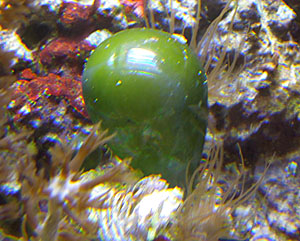 Symptoms: Dark green, black, or red bubbles that look like they are made of plastic are attached to the rocks and sometimes on the glass and filters.
Description: This is actually a form of algae. The bubbles, also known as vesicles, are small bladders that contain water. These vesicles also contain spores. When the vesicle grows large enough, it will pop and release thousands of spores which will travel around the aquarium to form new vesicles. Bubble algae of a number of different species with slightly different shapes and colors, but they all pretty much have the same characteristics. Bubble algae is notoriously hard to eliminate once it gets established. (Photo © Sea and Sky)
Treatment: The first step for treatment is to manually remove as much of the algae as possible. Carefully remove the bubbles using a sharp instrument such as a sharpened screwdriver or razor blade. Be careful not to pop the bubbles as this can actually help the algae spread. Part two of the treatment involves the use of herbivores. Emerald crabs can be particularly useful eliminating bubble algae and preventing its return. Hermit crabs and sally lightfoot crabs can also be useful. It has been reported that some red-leg hermit crab species will also eat bubble algae.
Prevention: Prevention of bubble algae is pretty much the same as for all algae. You must reduce the algae's food supply by removing nutrients from the water. A really good protein skimmer is a good investment for any serious aquarist. A phosphate reactor can also help to remove excess nutrients from the water. Regular water changes are also necessary if you want to prevent algae from growing. Make sure to use pure water. Consider investing in an RO/DI water filtration system.
Slime Algae
Symptoms: Dark red or brown algae that covers the rocks and sand, resembling velvet. It has a slimy texture and will sometimes be seen with small air bubbles on it. Slime algae tends to peel off in large slimy sheets.
Description: This is not actually an algae at all. It is a form of bacteria known as cyanobacteria. It is one of the oldest forms of life on earth and may represent an evolutionary link between bacteria and algae. It may start out in small patches and slowly spread throughout the aquarium.
Treatment: Commercial antibiotic treatments for slime algae are available at your local aquarium store. They vary slightly from one brand to the next, so make sure you read the instructions thoroughly and follow the directions exactly. Improper use of antibiotics can affect the beneficial bacteria that filter the water. Monitor ammonia and nitrite levels after use to make sure your biological filtration has not been damaged. Most of these treatments are safe for use in a reef aquarium as long as you follow the directions exactly. When used properly, these treatments are effective for controlling slime algae outbreaks.
Prevention: Slime algae is usually caused by high levels of nutrients and organic waste in the water. Make sure to perform regular water changes once or twice per month. Regular water changes are the best way to control algae. If you don't have one, install a good quality protein skimmer to remove organic waste. You can also install a phosphate reactor to remove phosphates from the water.
Asterina Starfish
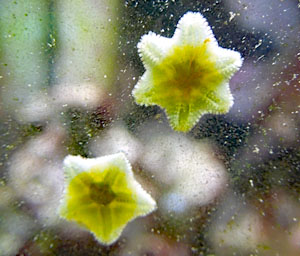 Symptoms: Tiny, white, gray, or green spotted starfish all over the rocks and aquarium glass. They are no larger than your pinky thumbnail and will be seen to have between two and five legs of varying lengths.
Description: These starfish are known as asterina. They are an invasive species that is commonly added to the aquarium as a hitchhiker on live rock or coral when it is added to the aquarium. The starfish multiply by breaking off their legs. Each leg that breaks off will grow into a new starfish in a matter of days. Once introduced, asterina can quickly overcome a reef tank and can decimate your coral. There is some debate within the aquarium community as to whether asterina will eat coral. I can tell you from experience that they definitely do. It started out with just a few starfish and then within months there were literally thousands of them. I recently had an outbreak in my aquarium and within a few months all of my zoanthids had completely disappeared. I also lost a torch coral. They even removed nearly all of the coralline algae from my live rock. (Photo © Sea and Sky)
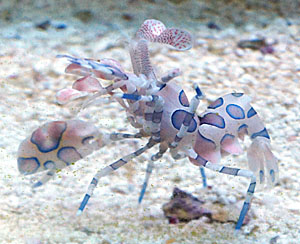 Treatment: The only effective treatment for an asterina invasion is control by means of the harlequin shrimp. The diet of the harlequin shrimp consists solely of starfish. I added two harlequin shrimp to my reef aquarium and within six months the asterina were gone. The only issue with this treatment is that once the asterina are gone, the shrimp will starve unless you can find a way to keep feeding them starfish. If you can catch them, you can remove them and sell them back to your local aquarium store. Be careful though. If you have any other starfish in your aquarium, you will have to remove them before adding the harlequin shrimp. They will eat every starfish they can find.
(Photo © Sea and Sky)
Prevention: Since asterina are introduced to the aquarium as hitchhikers, the only known prevention method is to thoroughly examine every piece of coral or live rock before introducing it to your aquarium. Remove any asterina stars you may see in your tank before they multiply to biblical proportions.Photo ©
Aiptasia Anemones
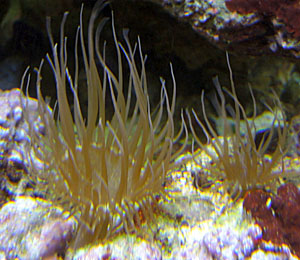 Symptoms: Small, clear to pink anemones growing on the rocks and/or glass in the aquarium. The have a circular disk and long tentacles.
Description: Aiptasia are one of the banes of the marine reef aquarium hobbyist. They are an invasive species that is commonly added to the aquarium as a hitchhiker on live rock or coral when it is added to the aquarium. They multiply quickly and can take over a reef aquarium if not treated. They can sting fish and damage corals. Larger anemones have even been known to catch and eat smaller fish.
Treatment: When treatment of aiptasia you have two choices: chemical or biological. Chemical treatments are commercially available that can work quite well if you are persistent. They are marketed under names like Joe's Juice or Aiptasia X. I have had good results with Aiptasia X. These products are applies directly to the anemone using a small syringe. Within minutes the anemone will shrivel and implode. The only problem with these products is that the anemone will grow back, so you have to be diligent and keep using it until they are gone. The products are safe for use in a reef aquarium. A biological treatment is also available in the form of a fish. The aiptasia eating filefish, or matted filefish (Acreichthys tomentosus) will eat the anemones and can completely clean out a serious infestation in a matter of months. I would suggest going with the Aiptasia X for small infestations and the filefish for large infestations.
Prevention: Since aiptasia are introduced to the aquarium as hitchhikers, the only known prevention method is to thoroughly examine every piece of coral or live rock before introducing it to your aquarium. Treat any aiptasia with Aiptasia X or similar remedies as soon as you see them to prevent them from spreading and becoming a problem. (Photo © Sea and Sky)
Glossary of Terms | Aquarium FAQ | Aquarium Setup | Aquarium Equipment
Diseases & Pests | Clubs & Organizations | Public Aquariums | Aquarium Software
Aquarium Photo Gallery | Aquarium Suppliers | Aquarium Resources | My Sea