Messier Catalog: M91 - M100
M81 - M90 | Messier Menu | M101 - M110
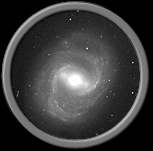 M91
Galaxy in Coma Berenices
Common Names: None
4548
10.2
12h 35.4m
+14° 30'
M91
Galaxy in Coma Berenices
Common Names: None
4548
10.2
12h 35.4m
+14° 30'
Located in the constellation of Coma Berenices is a small, dim galaxy known as M91. Until recently, this galaxy had been missing. Messier's notes had given the wrong position for this object. An amateur astronomer from Texas finally figured out its true location in 1969. This galaxy is classified as a barred spiral. The center part of the galaxy displays a prominent bar-shape, which can be seen even in small telescopes. M91 is a member of the Virgo cluster of galaxies and it located about 60 million light-years from Earth. It is receding from us at a rate of 400 km/sec. With a magnitude of only 10.2 it is best observed with a large telescope.
Image credit: NOAO/AURA/NSF
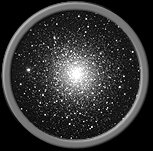 M92
Globular Cluster in Hercules
Common Names: None
6341
6.4
17h 17.1m
+43° 08'
M92
Globular Cluster in Hercules
Common Names: None
6341
6.4
17h 17.1m
+43° 08'
The constellation of Hercules is the site of a globular cluster known as M92. This cluster is located about 26,000 light-years from Earth and has a diameter of around 85 light-years. It is believed to be around 16 billion years old and is approaching us at a rate of 112 km/sec. This is an outstanding object, and with a magnitude of 6.4, it can actually be seen with the naked eye on a dark night. It is a prime candidate for observing with binoculars. A telescope will be able to resolve the individual stars in the cluster.
Image credit: Hillary Mathis, REU program/NOAO/AURA/NSF
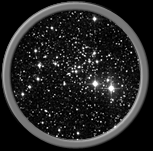 M93
Galactic Cluster in Puppis
Common Names: None
2447
6.0
7h 44.6m
-23° 52'
M93
Galactic Cluster in Puppis
Common Names: None
2447
6.0
7h 44.6m
-23° 52'
M93 is an open cluster of stars located within the Puppis constellation. This is a small but bright cluster with a visual magnitude of 6. Its visual appearance has been said to resemble that of a butterfly. Some have even identified it with a starfish. The cluster contains about 80 stars scattered over a distance of around 25 light-years. The brightest of these stars are blue giants. M93 is believed to be located some 3,600 light-years from Earth. Its can easily be seen with a pair of binoculars. A small telescope will reveal more of the clusters fainter stars.
Image credit: Two Micron All Sky Survey (2MASS)
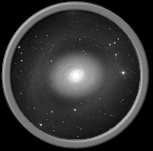 M94
Galaxy in Canes Venatici
Common Names: None
4736
8.2
12h 50.9m
+41° 07'
M94
Galaxy in Canes Venatici
Common Names: None
4736
8.2
12h 50.9m
+41° 07'
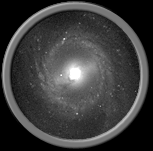
In the constellation of Leo, the lion, can be found an interesting spiral galaxy known as M94. This galaxy has an extremely bright inner region, surrounded by a ring of active star-forming regions. Color photographs of the galaxy reveals the blue colors of these young stars. Another region of moderate star formation is also visible. The distance of this galaxy is not well known, but best estimates place it at about 15 million light-years from us. With a magnitude of 8.2, it can be found with binoculars. Telescopes will reveal much more detail in this galaxy.
Image credit: Hillary Mathis, N.A.Sharp/NOAO/AURA/NSF
 M95
Galaxy in Leo
Common Names: None
3351
9.7
10h 44m
+11° 42'
M95
Galaxy in Leo
Common Names: None
3351
9.7
10h 44m
+11° 42'
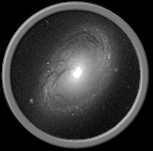
Leo is also the constellation in which the spiral galaxy, M95, can be found. It is a member of a small group of galaxies known as the M96 group. This is a barred spiral galaxy with a visual magnitude of 9.7. It is located about 38 million light-years from Earth. Visually, it shows a definite bar-shaped center with nearly circular spiral arms. Because of this, it has also been referred to as a ringed galaxy. This is not a very bright object, and may be a difficult target for binoculars. Telescopes will provide the best viewing.
Image credit: Hillary Mathis, N.A.Sharp/NOAO/AURA/NSF
 M96
Galaxy in Leo
Common Names: None
3368
9.2
10h 46.8m
+11° 69'
M96
Galaxy in Leo
Common Names: None
3368
9.2
10h 46.8m
+11° 69'
Yet another galaxy to be seen in the constellation of Leo is M96. It is the brightest member of the M96 group of galaxies, with a visual magnitude of 9.2. This object is located about 38 million light-years from Earth and has a diameter of around 100,000 light-years. Visually it has a bright inner disk composed of old yellow stars surrounded by blue knots of young stars. It is inclined about 35 degrees to our line of sight, which gives it a slightly elongated appearance. Although it can be spotted with binoculars on a good night, a telescope is required to see any real detail in this galaxy.
Image credit: NOAO/AURA/NSF
 M97
Planetary Nebula in Ursa Major
Common Names: Owl Nebula
3587
9.9
11h 14.8m
+55° 01'
M97
Planetary Nebula in Ursa Major
Common Names: Owl Nebula
3587
9.9
11h 14.8m
+55° 01'
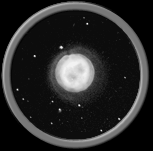
The constellation of Ursa Major is the location of the famous Owl Nebula, M97. This planetary nebula got its name from the two round dark regions, which resemble the eyes of an owl. It is one of the fainter objects in the Messier catalog with a magnitude of only 9.9. The structure of M97 is unusually complex for a planetary nebula. It is illuminated by a 16th-magnitude star at its center. As with most planetary nebulae, its distance is not certain. Best guesses place it at about 2,600 light-years from Earth. This dim object requires a large telescope for any serious viewing.
Image credit: Karen Kwitter (Williams College), Ron Downes (STScI), You-Hua Chu (University of Illinois) and NOAO/AURA/NSF
 M98
Galaxy in Coma Berenices
Common Names: None
4192
10.1
12h 13.8m
+14° 54'
M98
Galaxy in Coma Berenices
Common Names: None
4192
10.1
12h 13.8m
+14° 54'
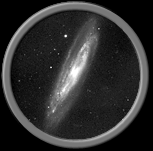
M98 is a small, dim galaxy located in the constellation of Coma Berenices. It is a member of the Virgo cluster of galaxies, which contains a total of 16 galaxies from the Messier catalog. It is one of the most difficult galaxies in the cluster to observe. Some astronomers believe that this could actually be a foreground object and not actually a member of the cluster, but there is no compelling evidence to support this claim. It is located about 60 million light-years from Earth and is approaching us at a rate of 1200 km/sec. M98 is a spiral galaxy situated nearly edge-on to our line of sight. This gives it an extremely elongated shape. It is best viewed with a large telescope.
Image credit: NOAO/AURA/NSF
 M99
Galaxy in Coma Berenices
Common Names: None
4254
9.9
12h 18.8m
+14° 25'
M99
Galaxy in Coma Berenices
Common Names: None
4254
9.9
12h 18.8m
+14° 25'
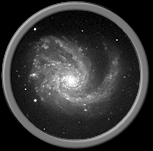
Another Virgo cluster member in Coma Berenices is a spiral galaxy known as M99. It is unusual in appearance in that its shape is very asymmetric. It is believed that this asymmetric shape is the result of a recent encounter of another member of the Virgo cluster. It is located about 60 million light-years from Earth and is receding from us at an unusually high rate of 2324 km/sec. Three supernovae have been observed in this galaxy. One was seen in 1967 while two other occurred in 1972 and 1986. With a magnitude of only 9.9, this galaxy may be a difficult find for the binocular observer. Large telescopes will provide the best views.
Image credit: NOAO/AURA/NSF
 M100
Galaxy in Coma Berenices
Common Names: None
4321
9.3
12h 22.9m
+15° 49'
M100
Galaxy in Coma Berenices
Common Names: None
4321
9.3
12h 22.9m
+15° 49'
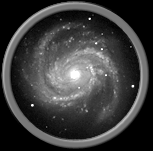
M100 is one of the brightest members of the Virgo cluster of galaxies. It is located in the constellation of Coma Berenices and is a beautiful example of a nearly face-on spiral galaxy. Visually, this galaxy has two bright spiral arms and several fainter arms. Color photographs reveal the young blue stars in these spiral arms. The galaxy has a slightly asymmetric shape, which may be the result of interaction with neighboring galaxies. M100 can be located with a pair of binoculars, although the best detail can be seen with a large telescope.
Image credit: N.A.Sharp/NOAO/AURA/NSF