


|
|
Pronunciation: (KAN-ser)
Abbreviation: Cnc Genitive: Cancri
Right Ascension: 8.69 hours Declination: 20.15 degrees
Area in Square Degrees: 506
Crosses Meridian: 9 PM, March 15
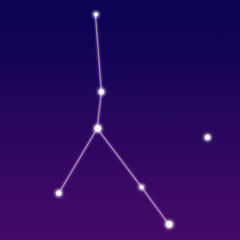
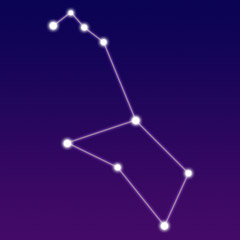
Cancer, the Crab, is visible in the northern hemisphere in the early spring. It can be seen in the southern hemisphere during autumn. This constellation is believed to represent the crab sent by Hydra to attack Hercules. In other ancient cultures it was believed to be the gate through which souls passed from Heaven to Earth as they were born into human bodies. Cancer is one of the 13 constellations of the Zodiac. This means that it is located along the ecliptic, the part of the sky through which the Sun and planets appears to pass during the year. Cancer contains two Messier objects. The most famous of these is M44, the beehive cluster. This is small star cluster that resembles a swarm of bees. The other object, M67, is another open star cluster. |
|
| Points of Interest in Cancer |
 |
Object |
Name |
Type/Translation |
V Mag |
| 1 |
M44 |
Open Star Cluster |
3.7 |
| 2 |
M67 |
Open Star Cluster |
6.1 |
| 3 |
Asellus Australis |
"Southern Donkey" |
3.94 |
| 4 |
Asellus Borealis |
"Northern Donkey" |
4.66 |
| 5 |
Acubens |
"Claw" |
4.25 |
| 6 |
Altarf |
"Tip" |
3.52 |
| 7 |
Tegmen |
"Cover" |
5.63 |
|
Return to top of page |
|
Pronunciation: (KAY-nis MY-ner)
Abbreviation: CMi Genitive: Canis Minoris
Right Ascension: 7.66 hours Declination: 5.9 degrees
Area in Square Degrees: 182
Crosses Meridian: 9 PM, March 1
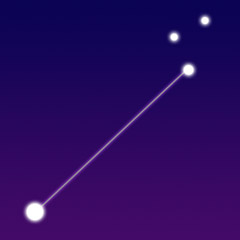
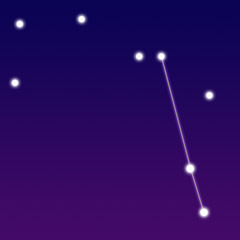
Canis Minor, the little dog, is visible in the northern hemisphere from December until April. In the southern hemisphere, it can be seen from November until April. This constellation represents the smaller of Orion's two hunting dogs. Canis Minor appears to stand on the back of Monoceros, the unicorn. The only point of interest in this constellation is Procyon, the 8th brightest star in the night sky. The name Procyon means "before the dog". The star got its name from the fact that is rises before Sirius, the dog star. |
|
| Points of Interest in Canis Minor |
 |
Object |
Name |
Type/Translation |
V Mag |
| 1 |
Procyon |
"Before the Dog" |
0.38 |
| 2 |
Gomeisa |
"The Bleary Eyed" |
2.90 |
|
Return to top of page |
|
Pronunciation: (kuh-REE-nuh)
Abbreviation: Car Genitive: Carinae
Right Ascension: 8.76 hours Declination: -59.89 degrees
Area in Square Degrees: 494
Crosses Meridian: 9 PM, March 15
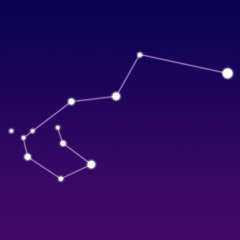
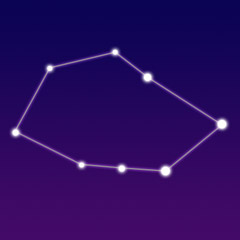
Carina is visible in south of 15 degrees north, and is completely invisible to latitudes north of 39 degrees. This constellation was originally part of a larger constellation of Argo Navis, the ship sailed by Jason and the Argonauts as they searched for the golden fleece. The stars in Carina represent the keel of the ship. Argo Navis was eventually split into 4 parts by the International Astronomical Union (IAU): Carina (the keel), Vela (the sails), Puppis (the stern), and Pyxis (the compass). Carina is the location of Canopis, the second brightest star in the sky. |
|
| Points of Interest in Carina |
 |
Object |
Name |
Type/Translation |
V Mag |
| 1 |
Canopis |
"Menelaus's Helmsman" |
-0.76 |
| 2 |
Avior |
* |
1.86 |
| 3 |
Turais |
"Little Shield" |
2.25 |
| 4 |
Miaplacidus |
"Placid Waters" |
1.68 |
|
Return to top of page |
|
Pronunciation: (LINKS)
Abbreviation: Lyn Genitive: Lyncis
Right Ascension: 8.03 hours Declination: 45.32 degrees
Area in Square Degrees: 545
Crosses Meridian: 9 PM, March 5
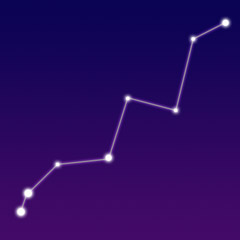
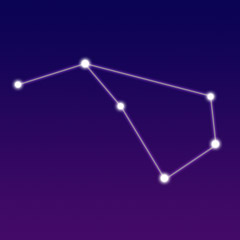
Lynx is visible to the northern hemisphere in February. This constellation was not originally named after the animal. Since it is composed of extremely faint stars, it was said that anyone who studied these stars should have eyes like a lynx. It was created mainly to fill some of the empty spaces between the other constellations. Lynx appears as a dim, bumpy line running just north of Leo and Cancer. Other than a few faint binary stars, this constellation contains nothing of interest. |
|
| Points of Interest in Lynx |
 |
Object |
Name |
Type/Translation |
V Mag |
| 1 |
Alsciaukat |
* |
4.25 |
|
Return to top of page |
|
Pronunciation: (PUP-is)
Abbreviation: Pup Genitive: Puppis
Right Ascension: 7.57 hours Declination: -39.39 degrees
Area in Square Degrees: 673
Crosses Meridian: 9 PM, February 25
Puppis can be seen from January through May. It is best viewed from the southern hemisphere or southern Unites States. This large constellation represents the stern, or poop deck of a ship. It was once part of a larger constellation called Argo Navis, the ship of Jason and the Argonauts. It is also one of the largest constellations in the southern hemisphere. Puppis contains three Messier objects, all of which are open star clusters. |
|
| Points of Interest in Puppis |
 |
Object |
Name |
Type/Translation |
V Mag |
| 1 |
M93 |
Open Star Cluster |
6.0 |
| 2 |
M47 |
Open Star Cluster |
5.2 |
| 3 |
M46 |
Open Star Cluster |
6.0 |
| 4 |
Azmidiske |
* |
3.34 |
| 5 |
Naos |
"Ship" |
2.25 |
|
Return to top of page |
|
Pronunciation: (PIK-sis)
Abbreviation: Pyx Genitive: Pyxidis
Right Ascension: 8.93 hours Declination: -31.03 degrees
Area in Square Degrees: 221
Crosses Meridian: 9 PM, March 15
Pyxis is completely visible in latitudes south of 53 degrees north from January through March. It represents a mariner's compass and was once part of the larger constellation, Argo Navis. When the Argo Navis was split into four smaller constellations, Pyxis was originally named Malus, the mast. It was later changed to Pyxis Nautica, the nautical box or mariner's compass. In modern times the name was shortened to Pyxis. The constellation is composed of very dim stars and contains no points of interest. |
|
| Points of Interest in Pyxis |
 |
| None
This constellation is composed mainly of faint stars. |
|
|
Return to top of page |
|
Pronunciation: (VEE-luh)
Abbreviation: Vel Genitive: Velorum
Right Ascension: 9.68 hours Declination: -47.45 degrees
Area in Square Degrees: 500
Crosses Meridian: 9 PM, March 25
Vela is completely visible in latitudes south of 33 degrees north from January through March. This constellation represents the sails of a ship. It is one the much larger constellation, Argo Navis, the ship of Jason and the Argonauts. Argo Navis was split up into four smaller constellations: the keel (Carina), the stern (Puppis), the compass (Pyxis), and the sails (Vela). Vela is one of the larger of the southern constellations. Although it contains no Messier objects, the skies in Vela are rich with double stars and small star clusters that can easily be seen with binoculars. |
|
| Points of Interest in Vela |
 |
Object |
Name |
Type/Translation |
V Mag |
| 1 |
Alsuhail |
"Smooth Plain" |
2.21 |
| 2 |
Suhail al Muhlif |
"Smooth Plain" |
1.78 |
|
Return to top of page |
|
Pronunciation: (VOH-lanz)
Abbreviation: Vol Genitive: Volantis
Right Ascension: 7.85 hours Declination: -69.63 degrees
Area in Square Degrees: 141
Crosses Meridian: 9 PM, March 1
Volans, the Flying Fish, is completely visible in latitudes south of 15 degrees north from December through February. When most of the dim stars in the constellation can be seen, it resembles a flying fish as seen from the side. Originally named Piscis Volans, this constellation is one of 12 that were named by Johann Bayer. It is located in the southern sky southwest of Carina and east of the Large Magellanic Cloud. Volans composed of very faint stars and contains no objects of interest. |
|
| Points of Interest in Volans |
 |
| None
This constellation is composed mainly of faint stars. |
|
|
Return to top of page |