




2021

February 20, 2021
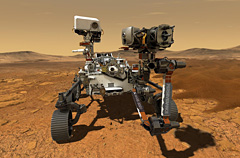
First Sounds Recorded on Mars
NASA's Perseverance rover records the first sounds captured on the surface of Mars. The rover beams the audio clips back to Earth and the first eerie sounds of wind gusting on the red planet are heard by human ears for the first time. Perseverance will continue to capture sound recordings on Mars including the the rover's motor, a laser cutting a rock, and the sounds of the Ingenuity helicopter.
NASA Public Domain Image
April 19, 2021
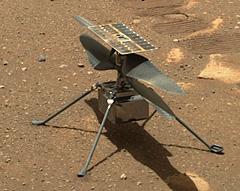
First Powered Flight on Another Planet
NASA's Ingenuity Mars helicopter makes history by becoming the first aircraft to make a powered, controlled flight on another planet. The small drone aircraft is launched from the Perseverance Mars rover and climbs to a prescribed maximum altitude of 10 feet (3 meters) where it maintains a stable hover for 30 seconds. It then descends and touches back down on the surface of Mars after logging a total of 39.1 seconds of flight. This successful flight marks a new era in planetary exploration.
NASA Public Domain Image
April 28, 2021
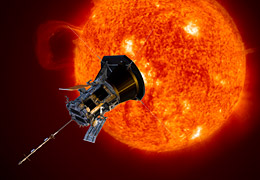
First Spacecraft to Enter the Sun's Atmosphere
NASA's Parker Solar Probe becomes the first man-made spacecraft to enter the atmosphere of the Sun. The spacecraft crosses the Alfvén critical surface where it stays for approximately 5 hours. This is the boundary that marks the end of the solar atmosphere and the beginning of the solar wind. During this time, the craft crosses into the Sun's corona 3 times and literally touches the Sun. It will continue to move even closer over the coming months.
SpaceX / CC0
September 15, 2021
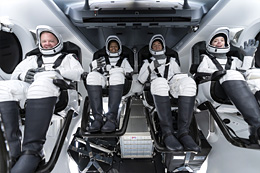
First All-Civilian Astronaut Crew
Space-X makes history once again by launching the first all-civilian astronaut crew Into orbit. The Inspiration 4 crew consists of Jared Isaacman, Sian Proctor, Chris Sembroski, and Hayley Arceneaux. They are launched aboard a reusable Falcon 9 rocket and spend three days in orbit around the Earth before re-entering the atmosphere and splashing down in the Atlantic Ocean. All though civilians have flown in space before, this is the first time an all-civilian crew has flown with no professional astronauts on board.
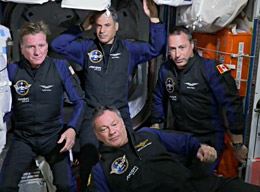
NASA public Domain Image
April 8, 2022
First All-Civilian Mission to the ISS
Axiom Space makes history by launching the first fully commercial mission to the international Space Station. The 4 civilian astronauts are launched into space on board a SpaceX Crew Dragon spacecraft and the mission is controlled by Axiom's Mission Control Center in Houston, Texas. This mission marks a major milestone for space tourism and the future of the commercial space industry. Axiom hopes to eventually launch a commercial space station in the not-too-distant future.
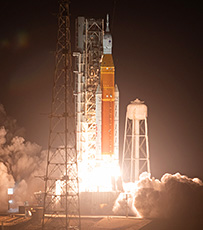
NASA public Domain Image
November 16, 2022
NASA Returns to the Moon
NASA sends the first Orion spacecraft into space to mark their return to lunar exploration. The Artemis 1 mission launches as an unmanned test mission to orbit the Moon and return to Earth. During this historic mission, the spacecraft spends three weeks in space and makes 2 separate orbits of the moon. The mission ends successfully with a splashdown in the Pacific Ocean west of Baja California near Guadeloupe Island. This successful test mission collects valuable data and captures video and detailed images of the Earth and Moon. A future Artemis mission will carry 4 astronauts to orbit the Moon for the first time since 1972.
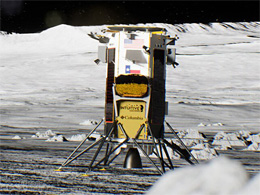
NASA public Domain Image
February 22, 2024
First Commercial Moon Landing
A small spacecraft built by a company called Intuitive Machines is launched aboard a SpaceX Falcon 9 rocket. Known as Odysseus, is becomes the first privately-built, commercial spacecraft to land on the Moon. The small craft, also known as Odie, touches down on the Moon's south pole on February 22. This is the first landing on the Moon by the United States in more than 50 years. Unfortunately, the lander tips over on its side shortly after landing. In spite of this failure, Odie sends data back to Earth for seven days before depleting its power reserves and falling silent after losing the light from the Sun. Hopes that the lander would go back online after the Sun reaches it again never materialize.

NASA public Domain Image
September 12, 2024
First Commercial Spacewalk
The crew of SpaceX mission Polaris Dawn perform the first commercial spacewalk. On the third day of the mission, all 4 members of the crew leave the Resilience spacecraft for the first spacewalk performed by a commercial crew. The crew spends nearly two hours outside the spacecraft in the vacuum of space. This mission marks a successful test of the new EVA suits designed by SpaceX. During this mission, the Resilience becomes the first US spacecraft to reach an orbit of 870 miles (1,400 kilometers), the highest orbit since the Apollo program over 50 years ago.
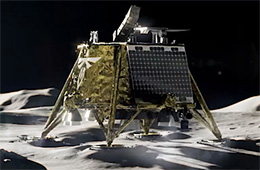
NASA public Domain Image
March 2, 2025
First Successful Commercial Moon Landing
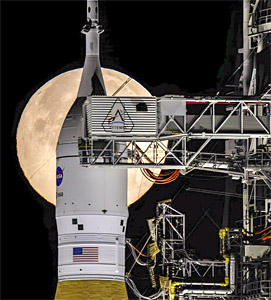
Following the failure of the Odysseus lander in 2024, a small craft known as Blue Ghost becomes the second commercial spacecraft to land on the Moon and the first to successfully complete its mission with no serious complications. Built by a company called Firefly Aerospace, Blue Ghost carries 10 NASA payloads on a mission dubbed "Ghost Riders in the Sky". The solar-powered spacecraft collects data and transmits it back to Earth for 14 days before losing the sunlight to the lunar night.
NASA public Domain Image
April 1, 2026
Mankind Returns to
the Moon
MASA's Artemis 2 mission launches from the Kennedy Space center in Florida for the first manned mission to the moon since 1972. After launching from the Kennedy Space Center on April 1, the four astronauts fly a close orbit around the moon and set several new records in the process. These include the first woman, first person of color, and first non-American to travel to the Moon. The mission also sets a record for the farthest that humans have ever traveled from Earth, roughly 4,100 miles (6,600 kilometers) farther than the previous record. After a mission duration of 9 days, 1 hour, and 32 minutes, the Orion spacecraft splashes down successfully in the Pacific Ocean on April 10.

NASA public Domain Image
April 1, 2026
First Woman to the Moon
Artemis 2 Mission Specialist Christina Koch becomes the first woman to travel beyond low earth orbit and visit the Moon. Christina is a space travel veteran, having served 328 days on the International Space Station from March 2019 to February 2020, which set the record for the longest single spaceflight by a woman.
NASA public Domain Image
April 1, 2026
First Person of Color to
the Moon
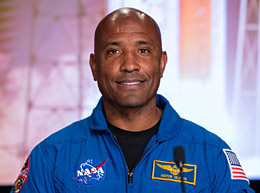
Artemis 2 Pilot Victor Glover becomes the first person of color to travel to the Moon. Victor is a space travel veteran. During the SpaceX Crew-1 mission, he was the first African American to complete a long-duration stay on the International Space Station (ISS). During this mission, he spent 168 days in space from November 2020 to May 2021 and completed 4 spacewalks.
NASA public Domain Image
April 1, 2026
First Non-American to Travel to the Moon
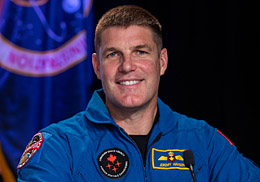
Canadian Space Agency (CSA) astronaut Jeremy Hansen becomes the first non-American to travel to the Moon. Jeremy is a Royal Canadian Air Force colonel and CSA astronaut. He was also part of the NEEMO 19 undersea exploration mission as an aquanaut aboard the Aquarius underwater laboratory. He served as mission specialist on the Artemis 2 mission to the Moon.
NASA public Domain Image
April 6, 2026
Farthest Humans
Traveled From Earth
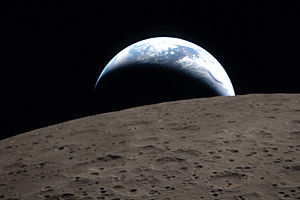
On April 6, 2026, just 6 days into the Artemis 2 mission, the crew sets a new record for the farthest that human beings have ever traveled from earth. As the Orion spacecraft travels around the far side of the Moon, it reaches a distance of 252,756 miles (406,773 km) from earth. This exceeds the previous record of 248,655 miles (400,171 kilometers) set by the Apollo 13 mission in 1970.